
All-Electric Press Brakes & Bending Centers
Compare PB all-electric servo press brakes, automatic mini CNC bending centers and flexible panel bending configurations for sheet metal brackets, panels and enclosures. Review the part drawing, tooling access and production cycle before choosing a machine.
Start with your drawing, material grade and bend sequence. Confirm the machine and tooling around the finished part.

your part needs.Application illustration · Ryichen CNC
PB Mini Servo Press Brake Models and Bending Lengths
Compare nominal force and bending length first. Your material strength, thickness, tooling opening and bend geometry determine the actual capacity you need.
| PB configuration | Nominal force | Nominal bending length |
|---|---|---|
| PB 8T500 | 8 tonnes | 500 mm |
| PB 15T600 | 15 tonnes | 600 mm |
| PB 20T800 | 20 tonnes | 800 mm |
| PB 30T1200 | 30 tonnes | 1,200 mm |
| PB 50T1600 | 50 tonnes | 1,600 mm |

You can customize a mini press brake to suit your part dimensions, material, thickness and bend geometry. The models above are starting points for comparing nominal force and bending length. They do not establish a universal sheet-thickness capacity. Confirm usable tooling length, stroke, open height, backgauge travel, machine dimensions and electrical specification in the final quotation.
PB-4008 Exploded View and Specifications
The PB-4008 shown here is a 400 kN configuration with an 800 mm bending length. The exploded view and specifications below apply to this configuration.
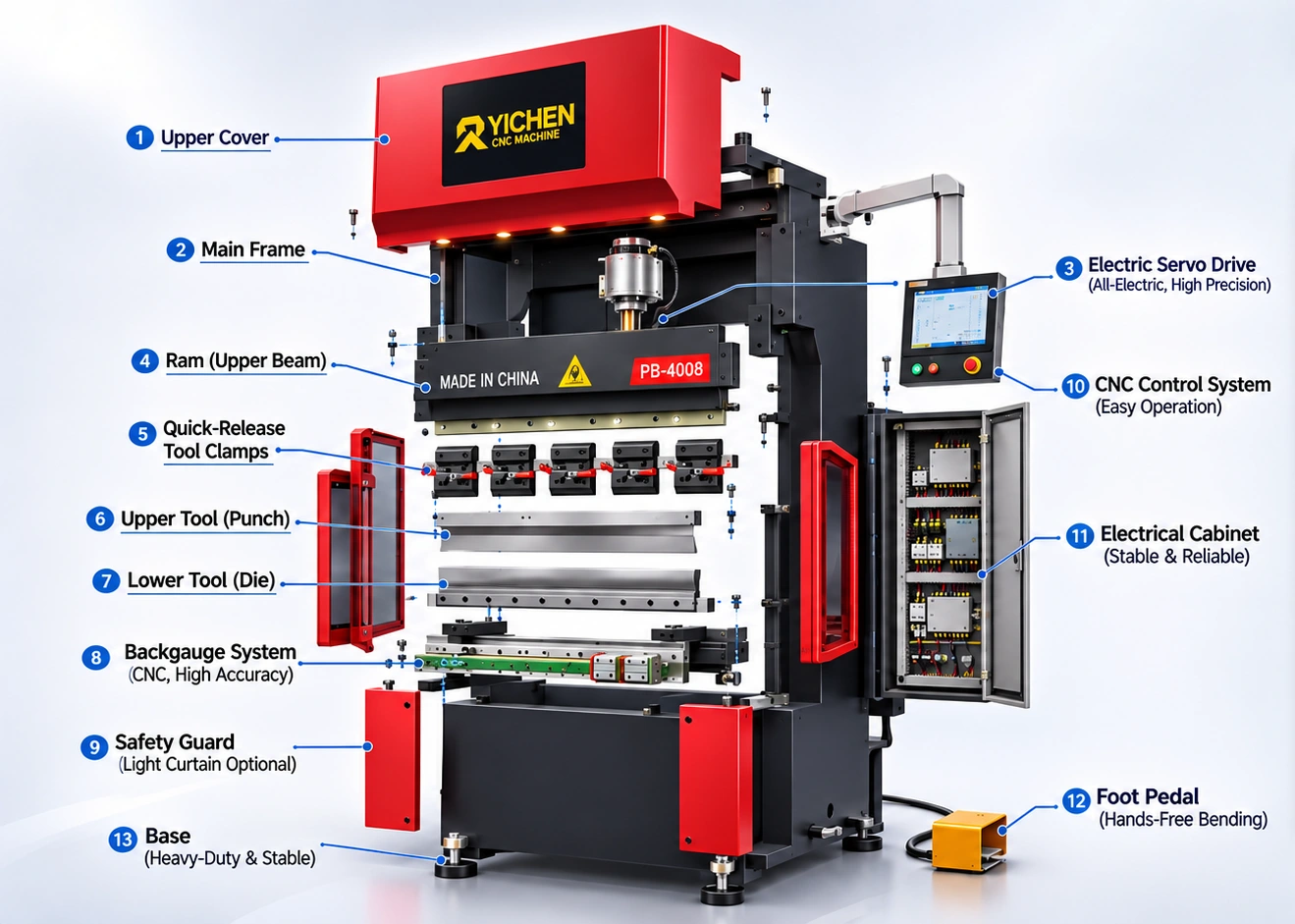
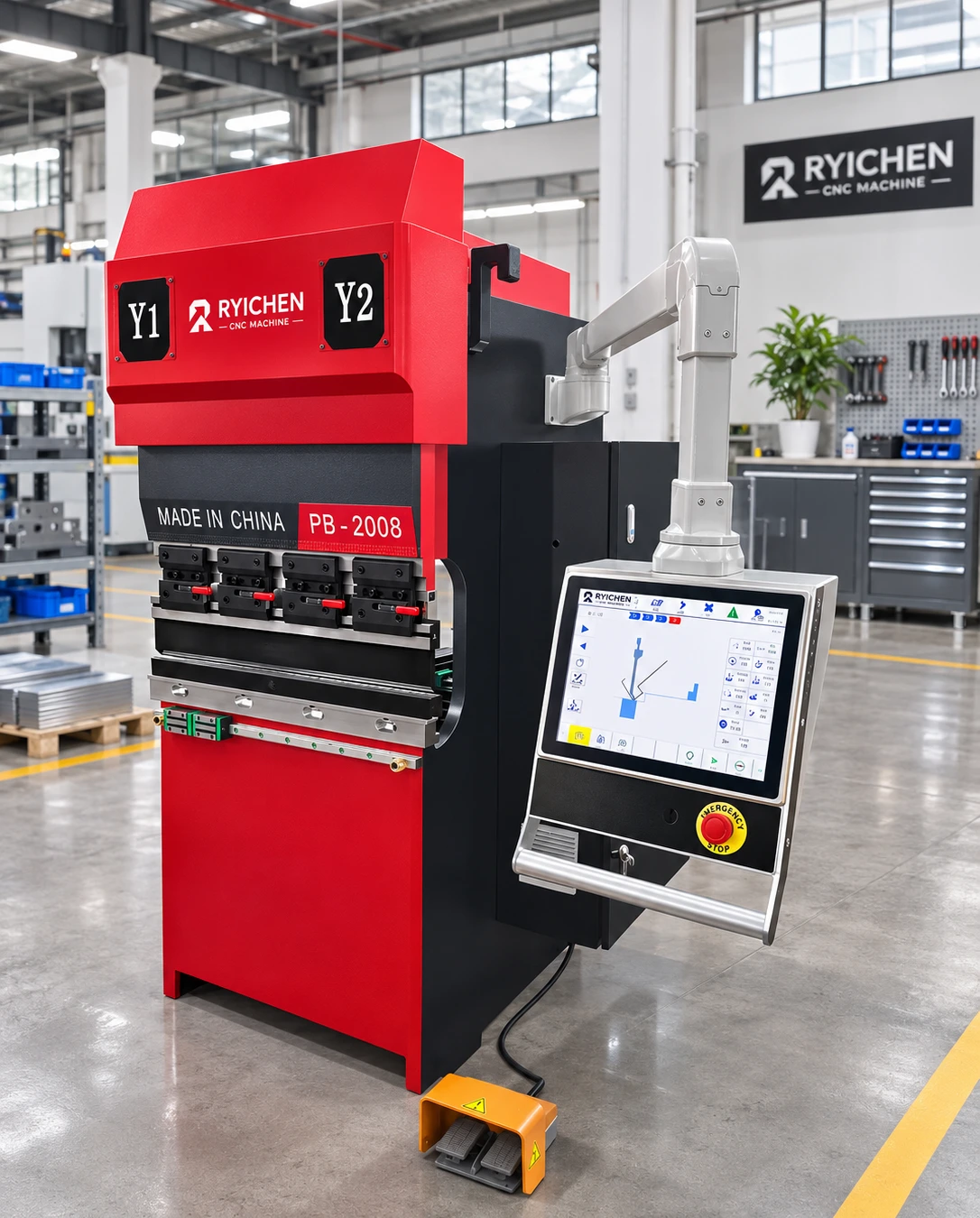


4-axis all-electric servo press brake with a Taiwan SYNTEC CNC controller
| Parameter | Specification |
|---|---|
| Nominal force | 400 kN |
| Bending length | 800 mm |
| Column spacing | 740 mm |
| Effective stroke | 120 mm |
| Maximum opening height | 480 mm |
| Throat depth | 100 mm |
| Ram speed · no load | 150 mm/s |
| Ram speed · bending | 8–50 mm/s |
| Ram speed · return | 150 mm/s |
| Main servo motor power | 2 × 5.5 kW |
| Main motor voltage | 380 V |
| Machine dimensions (L × W × H) | 1,050 × 950 × 1,850 mm |
| Machine weight | 2,100 kg |
| Ram repeatability | ±0.01 mm |
| Ram positioning accuracy | ±0.01 mm |
| Backgauge repeat positioning accuracy | ±0.02 mm |
| Workpiece straightness | 0.3 mm/m |
| Bend angle error | < 0.5° (absolute) |
| Linear scale resolution | 0.005 mm |
Automatic Mini CNC Bending Center
The custom 2,000 mm mini model shown below provides 1,250 mm maximum actual bending width and 200 mm maximum bending height. Its frame side plate spacing is 2,000 mm, and it accepts blanks up to 2,000 × 1,250 mm.
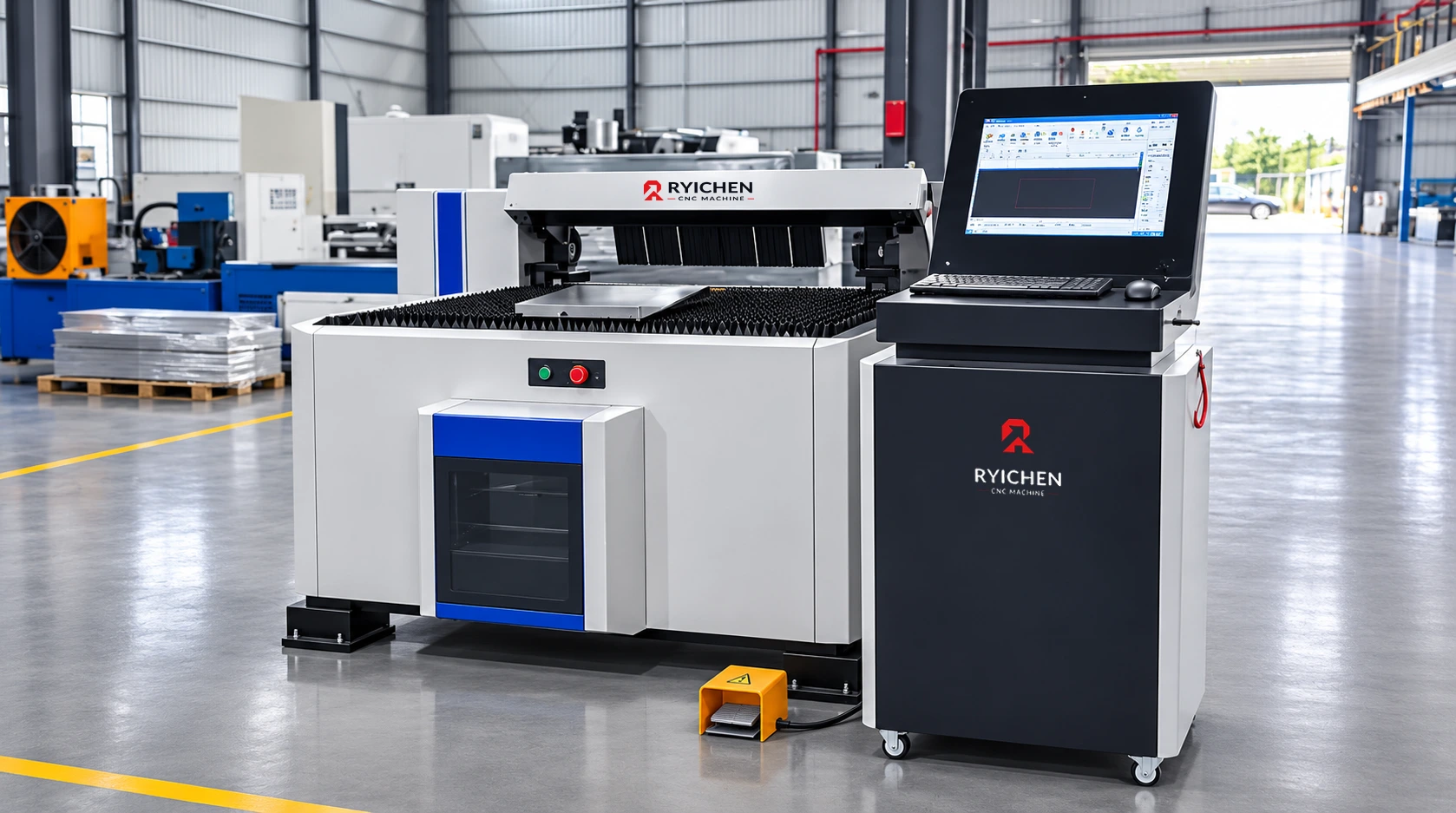
Bending Demonstration
| Parameter | Specification |
|---|---|
| Model | Custom 2,000 mm mini model |
| CNC axes | 7 (Y1, Z1, Z2, U1, D1, C1, X1) |
| Effective travel (X / Y / Z) | 2,000 / 1,250 / 200 mm |
| Frame side plate spacing | 2,000 mm |
| Maximum actual bending width | 1,250 mm |
| Maximum bending height | 200 mm |
| Listed bending speed | 0.2 seconds per bend |
| Bending capacity | 1.0 mm iron plate, 0.7 mm stainless steel, 1.5 mm aluminum |
| Bending accuracy | ±0.3° angle, ±0.1 mm dimension |
| Maximum blank size | 2,000 × 1,250 mm |
| Rated voltage | 220 V |
| Power (peak / average) | Approx. 27 / 15 kW |
| Overall dimensions | Approx. 2,800 × 2,380 × 1,500 mm |
| Total weight | Approx. 4.5 t |
| Ball screws / guide rails | Taiwan Dinghan / TBI |
| Bed material | Q235 steel |
| Bending processes | Upper bending and arc bending. Other processes available as options. |
| Interface language | English |
Custom Flexible CNC Bending Center
For larger parts, you can specify a flexible CNC bending center in configurations up to 3,200 mm. Share your part dimensions, material and bend geometry to confirm the working capacity for your application.
Read how to evaluate panel bender productivity and cost per part ↗
Send Your Part Drawing ↗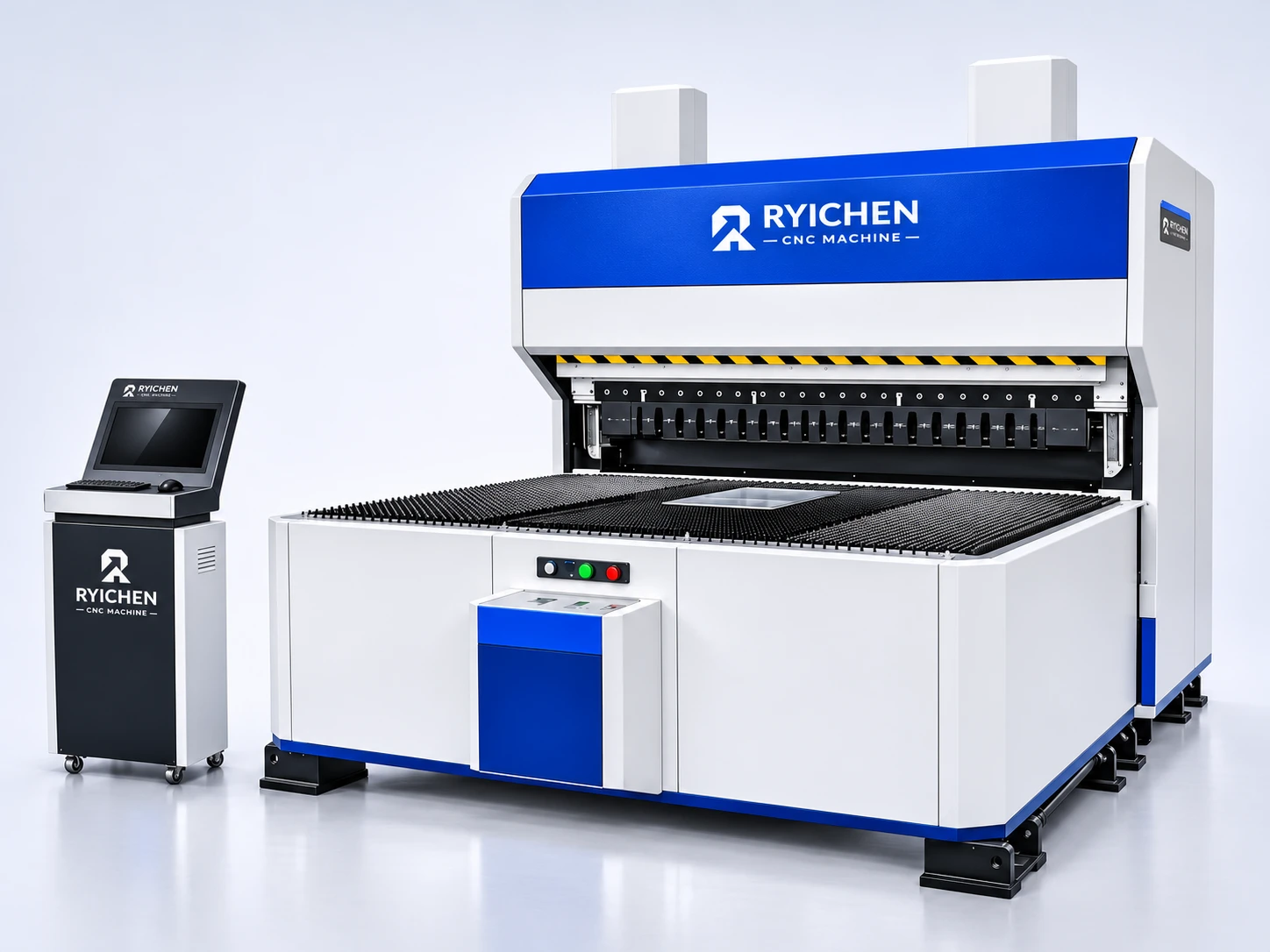
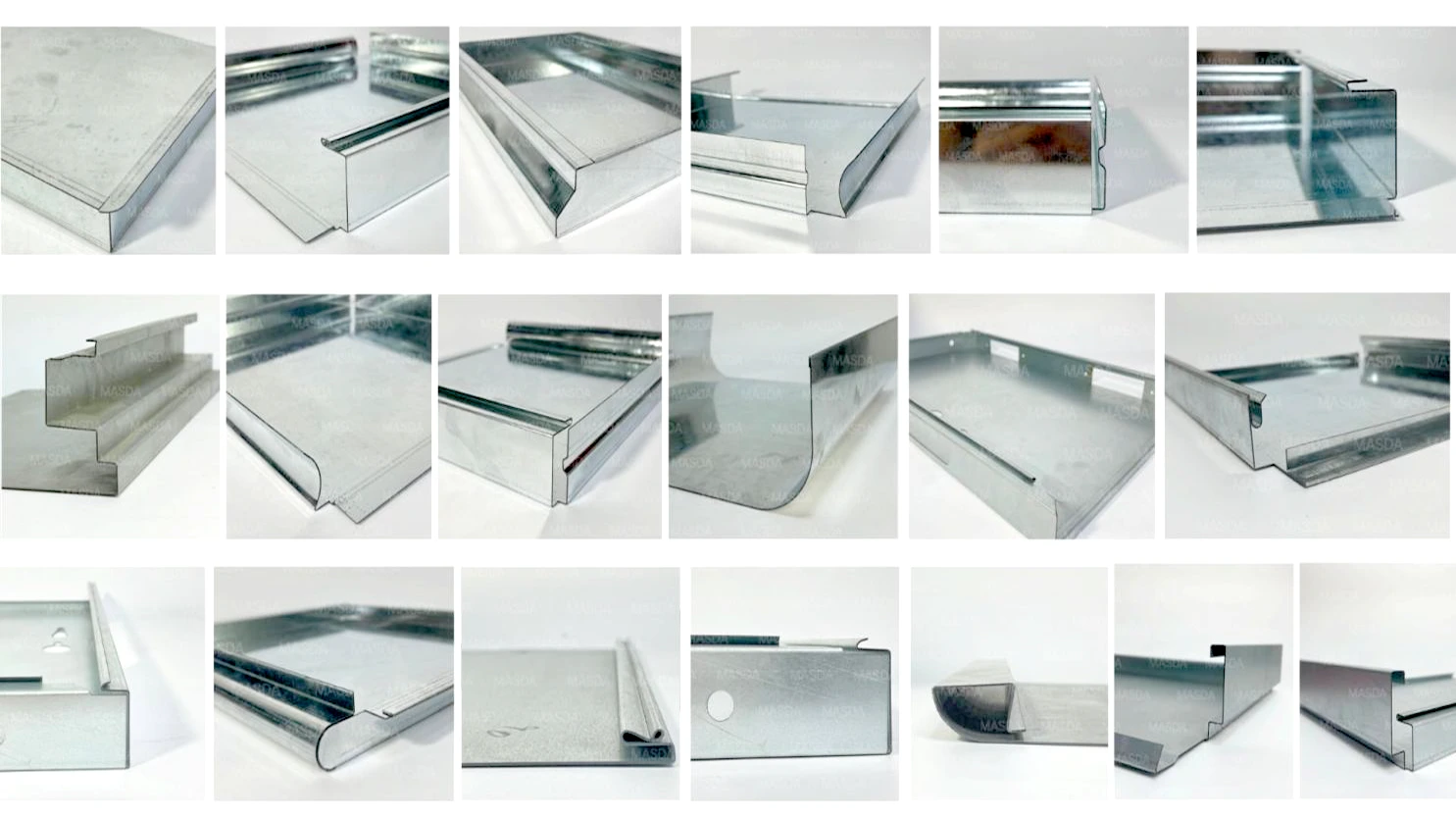
Sheet Metal Bending Applications: Brackets, Panels and Enclosures
Bent Sheet Metal Examples
Industries and Applications
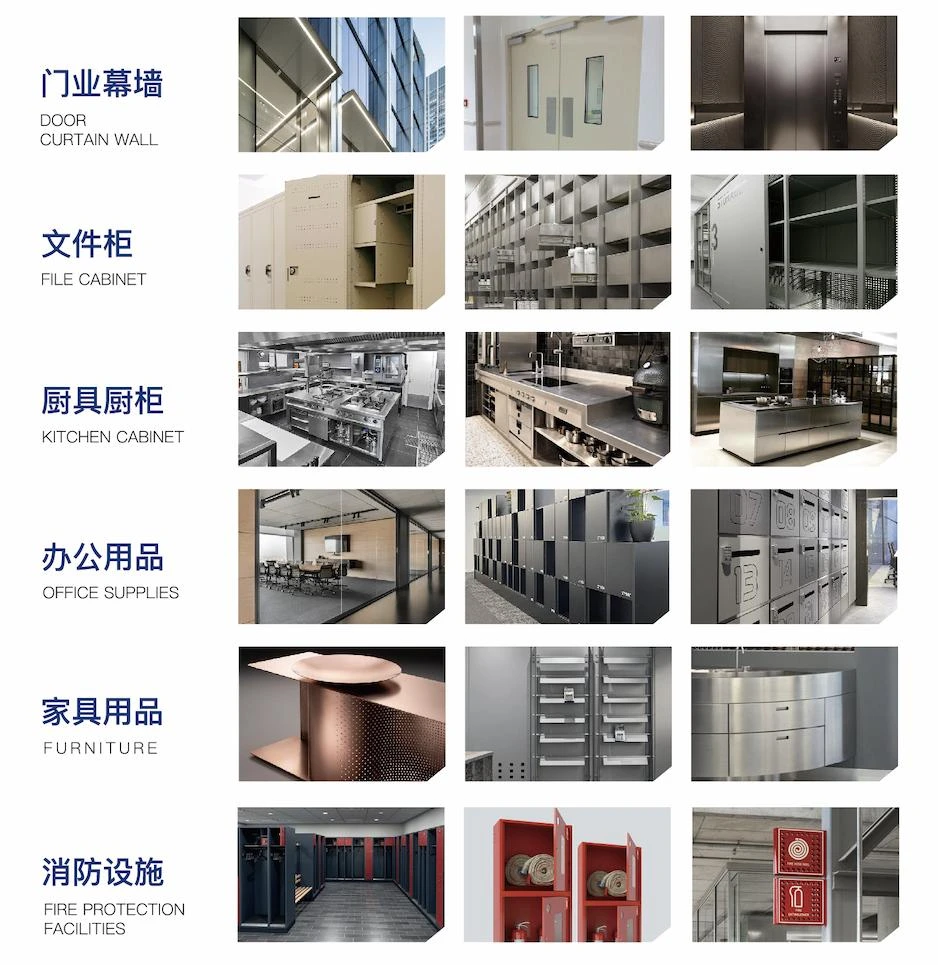
Brackets & mounting parts
Check hole-to-bend distances, short flanges and operator access. Tooling and backgauge support should suit the actual part, especially when dimensions are compact.
Panels & enclosures
Review bend sequence, return flanges and tool clearance before choosing a working length. A part may fit the bed yet still require a different tool profile.
Repeat parts & mixed batches
Share your batch sizes and expected daily output. Compare handling, positioning, tool changes and inspection as part of the production cycle.
How to Select a Press Brake or CNC Bending Center
A short bend in thick steel and a long bend in thin sheet place different demands on the machine. Send the complete part details for a focused recommendation.
Material & thickness
Specify material grade, thickness and any relevant strength or surface requirements.
Drawing & bend geometry
Include maximum bend length, angles, inside radius, shortest flange and the full bend sequence.
Tooling & acceptance
State the required punch and die arrangement, surface marking limits and finished-part tolerances.
Output & factory conditions
Share daily quantities, batch sizes, power supply and destination country.
Electric Press Brake Selection: Common Questions
Use the drawing review to clarify the machine, tooling and delivery scope before comparing quotations.
Which PB model suits your part?
The model depends on bend length, material, thickness, required force, tooling and clearance. Send a drawing or dimensioned sketch so the recommendation can account for the complete bend sequence.
What thickness can each model bend?
There is no single thickness rating that applies to every material and bend length. Material strength, die opening, tooling limits and the bending method all affect the required force.
Can you use your existing punches and dies?
Tool compatibility needs a check of the mounting interface, tool dimensions, load limits and required clearance. Send photographs and tool drawings before assuming compatibility.
Can the machine be configured for your factory power supply?
Provide your voltage, phase and frequency along with your destination country. Electrical configuration and any market-specific documentation must be confirmed in the quotation.
What should the quotation include?
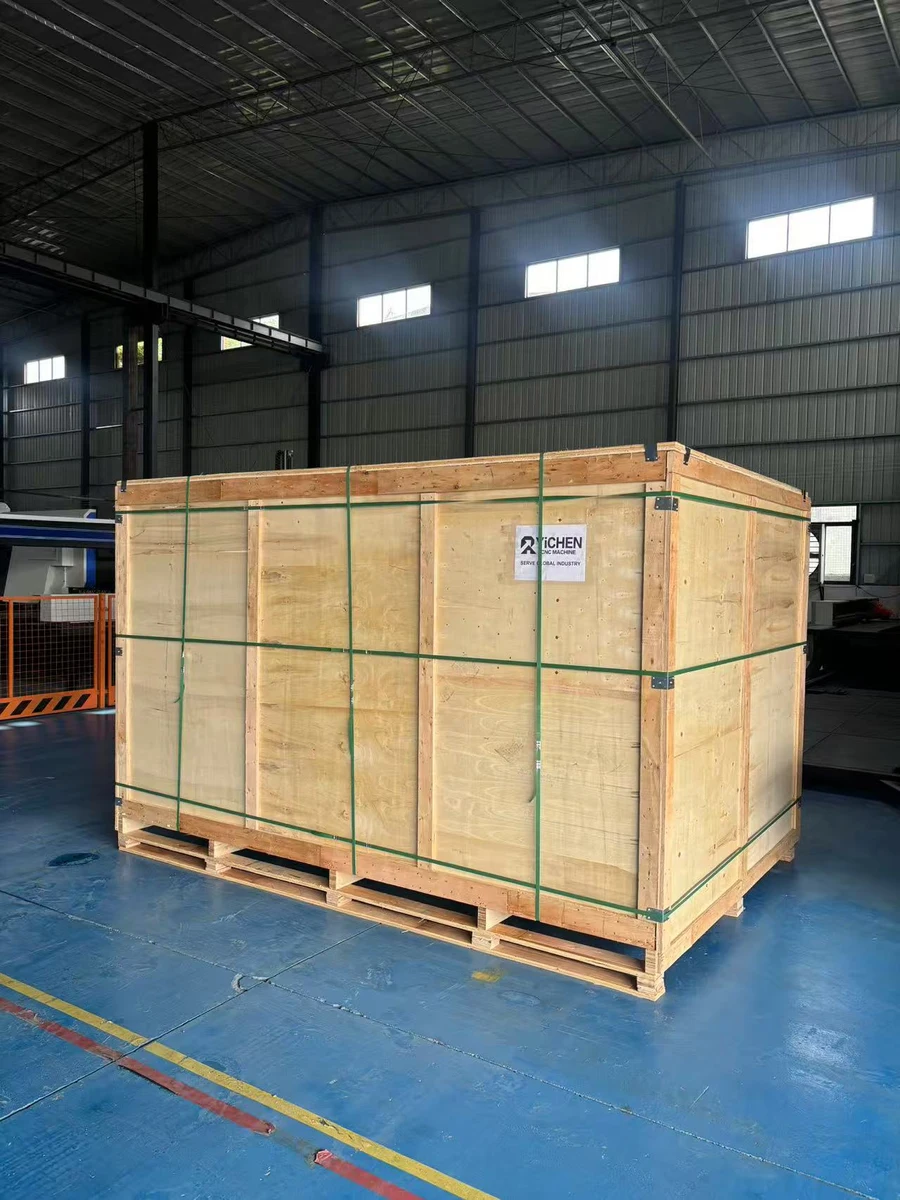
Confirm the machine configuration, controller, tooling, backgauge, safeguarding, documentation, packing and support scope. Ask for a representative part test when bend quality or geometry is critical.
Send your drawing.
Choose your bending setup.
Include material, thickness, bend length and daily output so your recommendation starts with your production requirements.
- Drawing or dimensioned part sketch
- Material grade and sheet thickness
- Bend length, angle and shortest flange
- Daily output and batch size
- Factory power supply and destination
Email: pascalzhu@ryichen.com
WhatsApp / WeChat: +86 180 5200 9096