
Laser Tube Cutting Machines
Choose a laser tube cutting machine around your tube profile, wall thickness and finished-part requirements.
Share drawings, material grades, thicknesses and production quantities. Confirm the power, work envelope and handling scope together.

Plan for the process.Application illustration · Ryichen CNC
5-axis laser tube cutting
Review the RCTC-5A-3KW specifications and watch a tube bevel cut on the shop floor.
RCTC-5A-3KW Automatic 5-Axis Bevel Laser Tube Cutting Machine
Cut holes, end profiles and beveled edges in tubular parts. The split-bed design allows cutting and material preparation to run in parallel.
Technical Specifications
- Laser power
- 3,000 W
- Round tube range
- Ø12–85 mm*
- Square tube range
- 12 × 12 to 60 × 60 mm*
- Maximum cutting thickness
- 3–5 mm, depending on material
- Cutting accuracy
- ±0.2 mm with tube curvature ≤2 mm/m
- X/Y repeat positioning
- ±0.05 mm
- Maximum acceleration
- 1.2 g
- Maximum single-tube load
- 60 kg
- Chuck speed
- Up to 150 rpm
- Machine body (L × W × H)
- 2,440 × 1,520 × 2,100 mm
- Electrical supply
- 3-phase 380 V, 50/60 Hz
*The table lists nominal specifications. Send your part drawings and cutting requirements, including tube profile, material grade, wall thickness, cut features and tolerances. We’ll review your application and confirm the machine model and configuration for your parts.
Live Bevel Cutting Demonstration
Tube Cutting Applications
Short tubes & end features
Send the shortest finished part length and the distance from each end feature to the nearest tube end. This lets us check chuck clearance, cutting access and how the finished part can be discharged.
Frames, tubes & profiles
For round tubes, provide the outside diameter. For square, rectangular or special profiles, provide the cross-section dimensions or a drawing. Mark slots, holes and end profiles that affect fit-up.
Beveled tube ends & joints
Mark the bevel angle and direction on the joint drawing. Include the wall thickness and any required root face or fit-up tolerance so we can review the proposed cut.
Laser-Cut Tube Samples
See holes, slots and angled end cuts on round, square and rectangular tube samples.

Industry Applications
- Exhaust & Emissions Systems
- Cut angled ends and sensor openings in exhaust tubes, or perforations in muffler cores.
- Furniture & Display Fixtures
- Cut mounting holes and assembly slots into round, square and rectangular tubing for frames and display racks.
- Architectural Metalwork
- Prepare mitered tube ends for handrails, balustrades and tubular frames.
- Industrial Equipment & Automation
- Cut access openings, mounting slots and end profiles for machine frames and conveyor supports.
A cutting machine.
A complete production decision.
Compare how the proposed system handles your actual work: loading the material, producing the cut, removing parts and preparing them for the next operation.
Loading & unloading
Confirm incoming tube stock length, part weights, loading assistance, finished-part discharge and handling of offcuts.
Cut quality & output
Choose a representative part for the cutting test. Agree on the dimensions to inspect, acceptable burrs and edge condition, and whether timing includes loading and unloading.
Utilities & installation
Review power supply, assist gas, compressed air, extraction, cooling, workspace and the proposed enclosure and safeguarding scope.
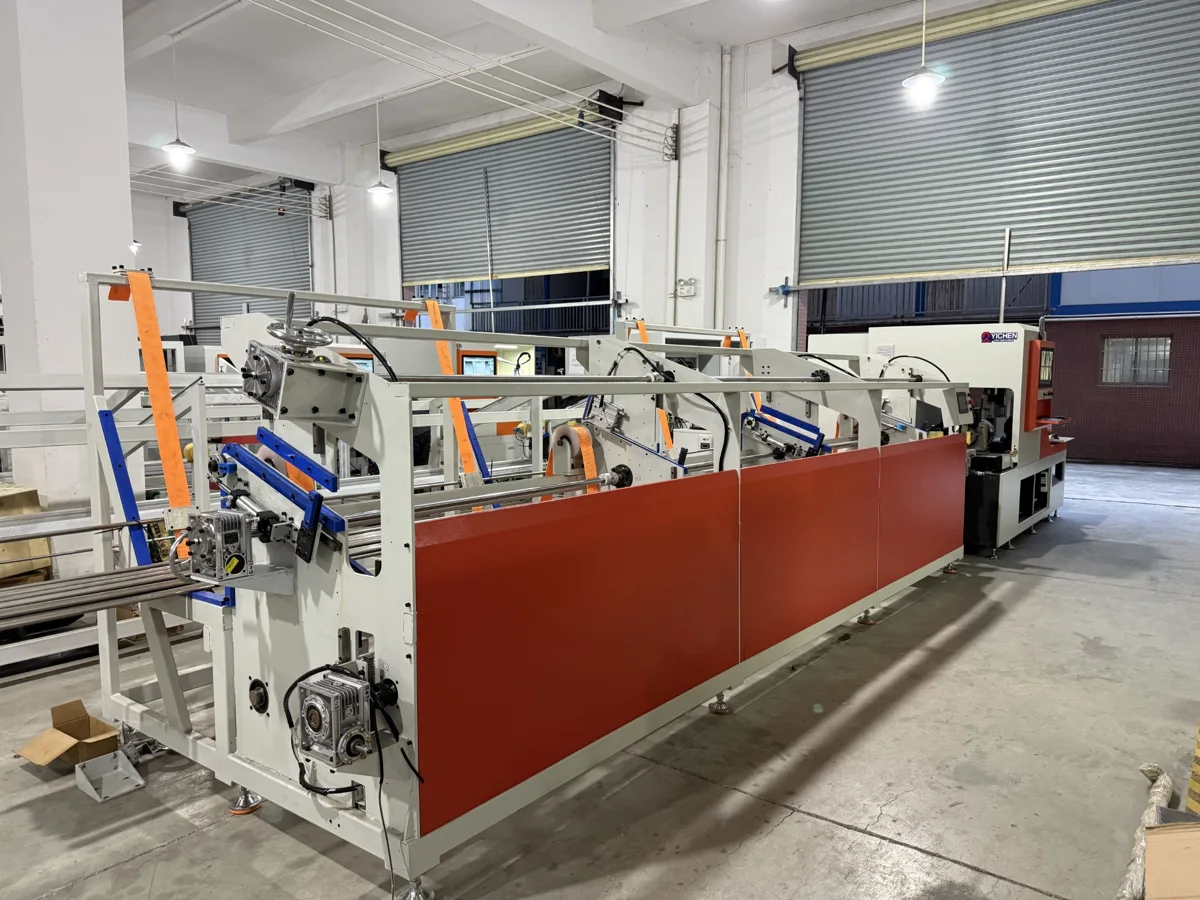
Production Workshop


Send the drawing.
Define the cutting brief.
The right recommendation starts with what you cut most often, not only the thickest or largest part you may encounter.
Material & stock
Material grades, tube wall thickness, stock dimensions and surface condition.
Geometry & files
Dimensioned drawings, DXF files or 3D models showing holes, profiles, bevels and critical features.
Quality & production
Required tolerances, edge condition, daily output, batch sizes and the next manufacturing operation.
Factory & investment
Electrical supply, gas availability, floor space, handling needs, destination and investment target.
Compare the cut.
Confirm the complete scope.
Use representative drawings and material to establish an agreed basis for the machine proposal and acceptance test.
Which laser power should you choose?
Provide the material grades, thickness mix, required edge condition and production target. Power should be selected together with the cutting head, gas supply, work envelope and actual part geometry.
Can the tube machine cut short parts and holes near the ends?
Provide the exact stock length, finished length and feature positions. Chuck spacing, support, cutting-head access and unloading determine whether the proposed arrangement can process the full part.
What information is needed for bevel cutting?
Send the profile, wall thickness, bevel angle, joint detail and 3D model where available. The accessible angle range and achievable geometry must be confirmed for the selected machine and workpiece.
What should your quotation include?
Confirm the laser source, cutting head, controller, cooling, working envelope, chucks where applicable, gas requirements, extraction, enclosure, loading and unloading, software, documentation and support scope.
Send your cutting files.
Get a focused recommendation.
Share your drawings and material range so your equipment proposal starts with the parts your factory needs to produce.
- Drawing, DXF or 3D model
- Material grades and thickness range
- Tube cross-section, stock length and shortest finished length
- Hole-to-end distances and bevel details, where applicable
- Edge quality, output and automation needs
- Factory power supply and destination
Email: pascalzhu@ryichen.com
WhatsApp / WeChat: +86 180 5200 9096