
CNC Plate Rolling
Machines
Build your rolling solution around the cylinder you need to produce—from a standalone plate roll to a coordinated rolling and welding line.
Share material grade, thickness, plate width, target diameter and output. Confirm capacity against the complete workpiece.
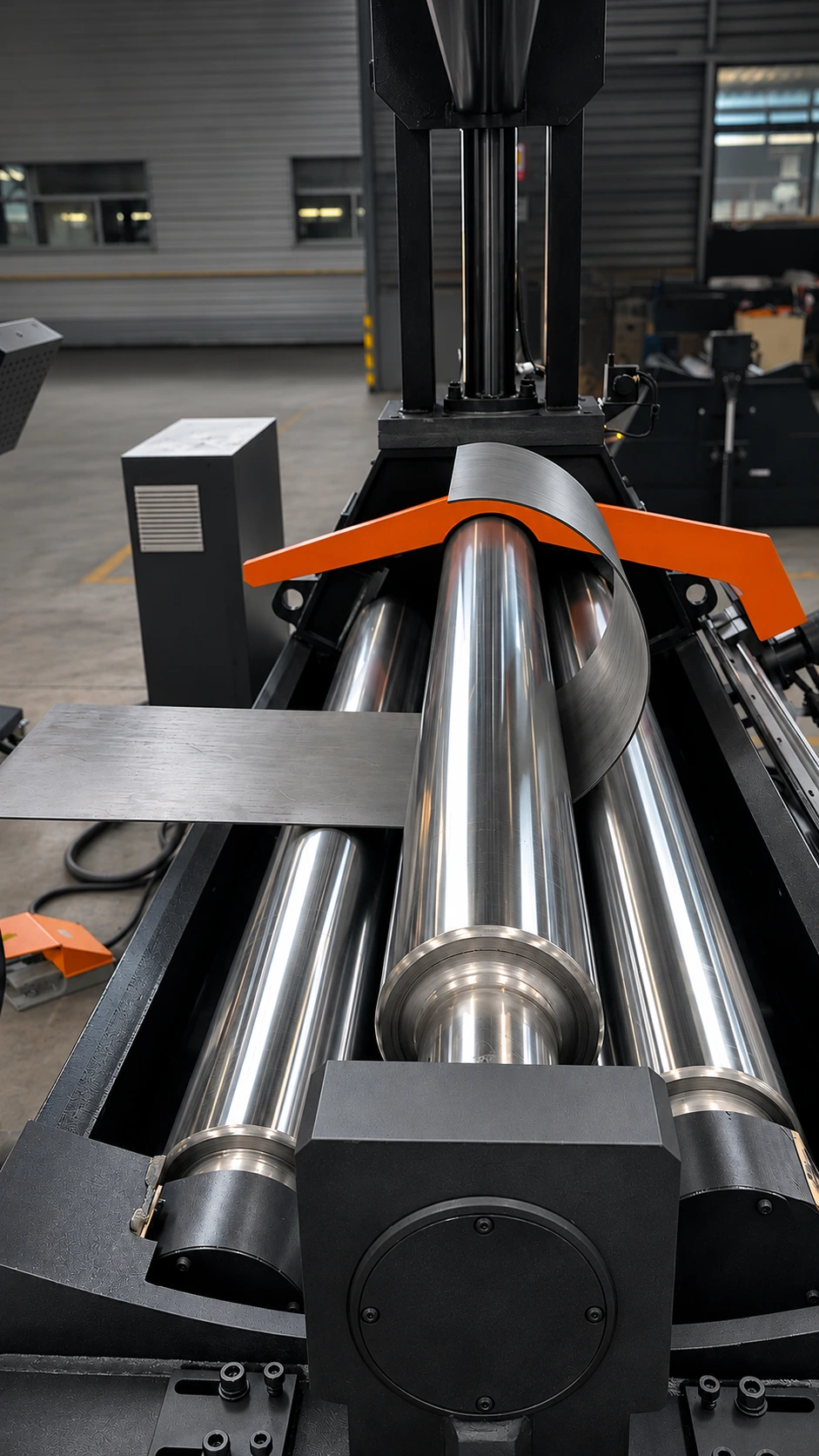
to production-ready form.Four-Roll Plate Rolling · Ryichen CNC
Compare 2-Roll, 3-Roll and 4-Roll Plate Rolling Machines
Roll count is only the starting point. Review the actual material, diameter range, edge requirements, handling method and production volume before selecting a machine.
Dedicated repeat work
Discuss a two-roll solution for a defined family of cylindrical parts. Confirm the roll arrangement and any dedicated tooling through a review of your samples.
- Provide the complete diameter range
- Review tooling for each product size
- Confirm surface and seam-edge requirements
Workshop fabrication
Compare a three-roll configuration around your mix of jobs. Check the proposed rolling sequence, end preparation and handling requirements on the selected machine.
- List common and maximum plate sizes
- Discuss pre-bending and remaining flat ends
- Confirm operator and handling arrangements
Four-roll CNC plate rolling
Standard model: 1,500 mm. Custom configurations are available for your plate size and target diameter.
Review a four-roll configuration when your project calls for controlled positioning, programmed rolling and integration with material handling.
- Confirm rolling and pre-bending capacities
- Review programs and part changeovers
- Define supports, loading and unloading
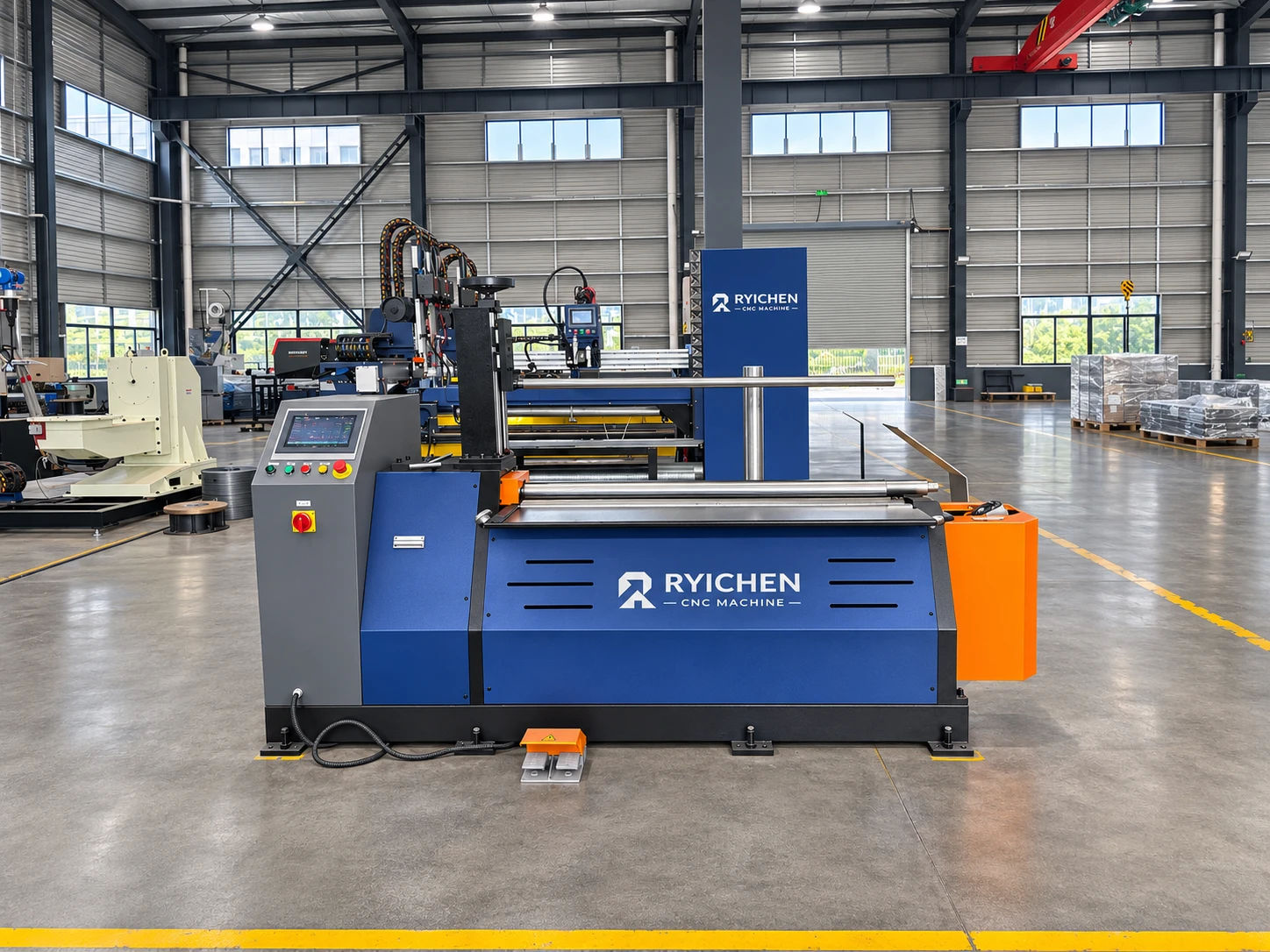
Four-Roll CNC Plate Rolling Machine
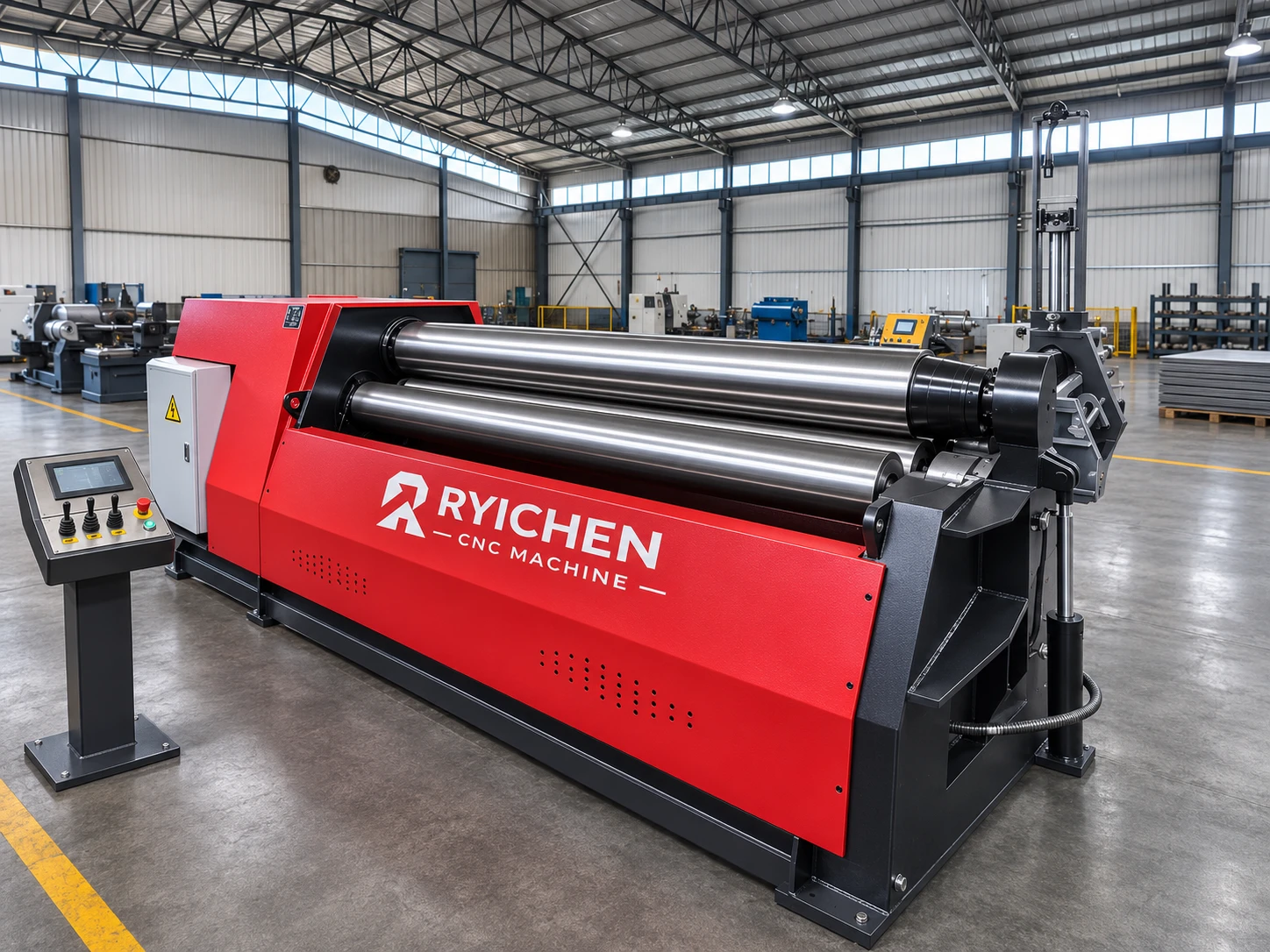
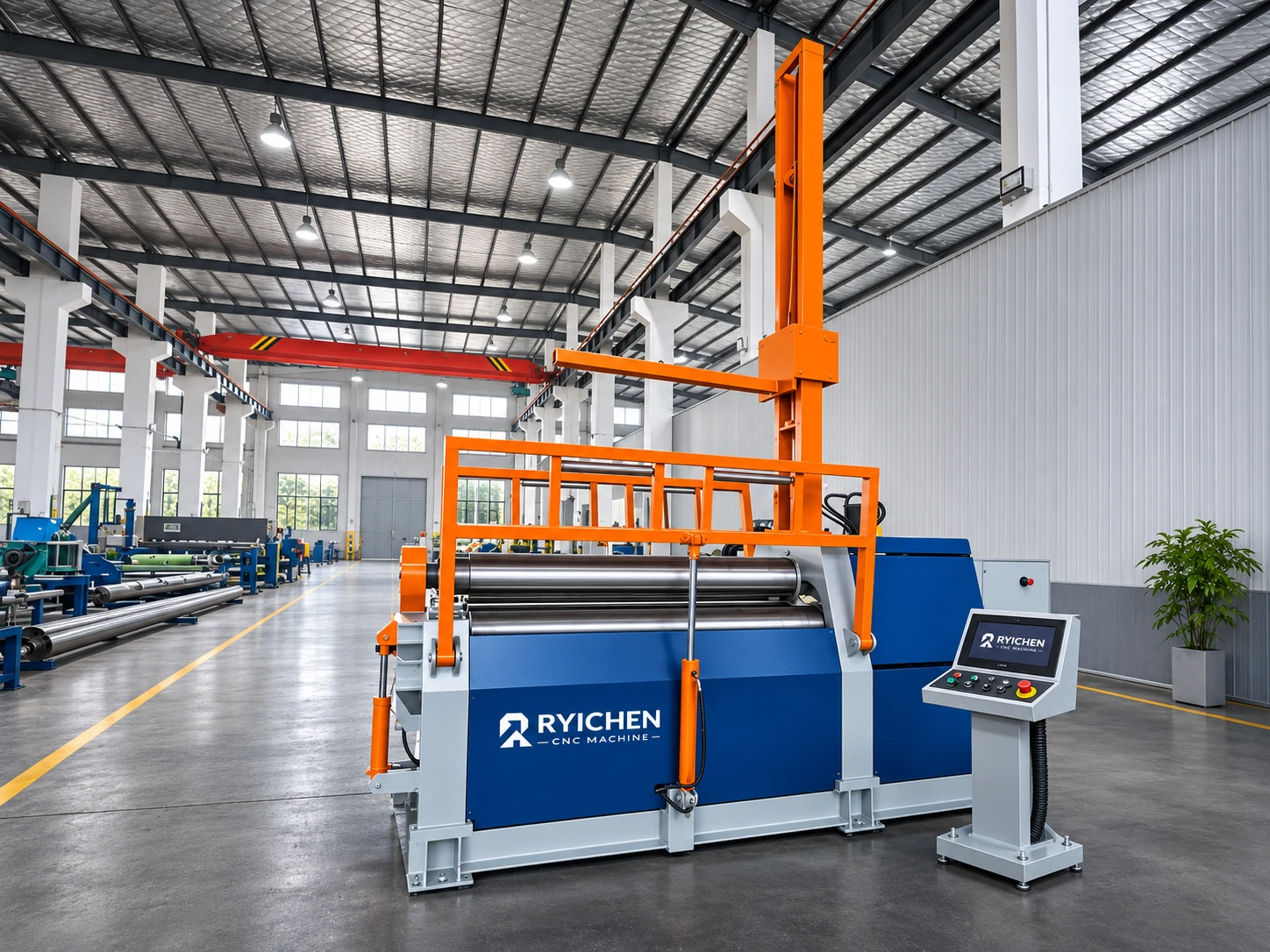


RCRM-1500 Standard Model Specifications
| Parameter | Specification |
|---|---|
| Model | RCRM-1500 |
| Material capacity · Carbon steel | Ø300–1,500 mm · Max. length 1,500 mm · Max. thickness 6.0 mm |
| Material capacity · Stainless steel | Ø300–1,500 mm · Max. length 1,500 mm · Max. thickness 3.0 mm |
| Maximum total power | 4 kW |
| Power supply | 380 V / 50 Hz |
| Rolling speed | 4 m/min |
| Program storage | Up to 999 programs per file |
| Repeat positioning accuracy | ±0.1 mm |
| Drive system | Hydraulic motor and hydraulic cylinder |
| Low-voltage components | Schneider relays and contactors |
| Overall dimensions (L × W × H) | 4,530 × 1,510 × 3,000 mm |
| Machine weight | 3.3 t |

Production Workshop
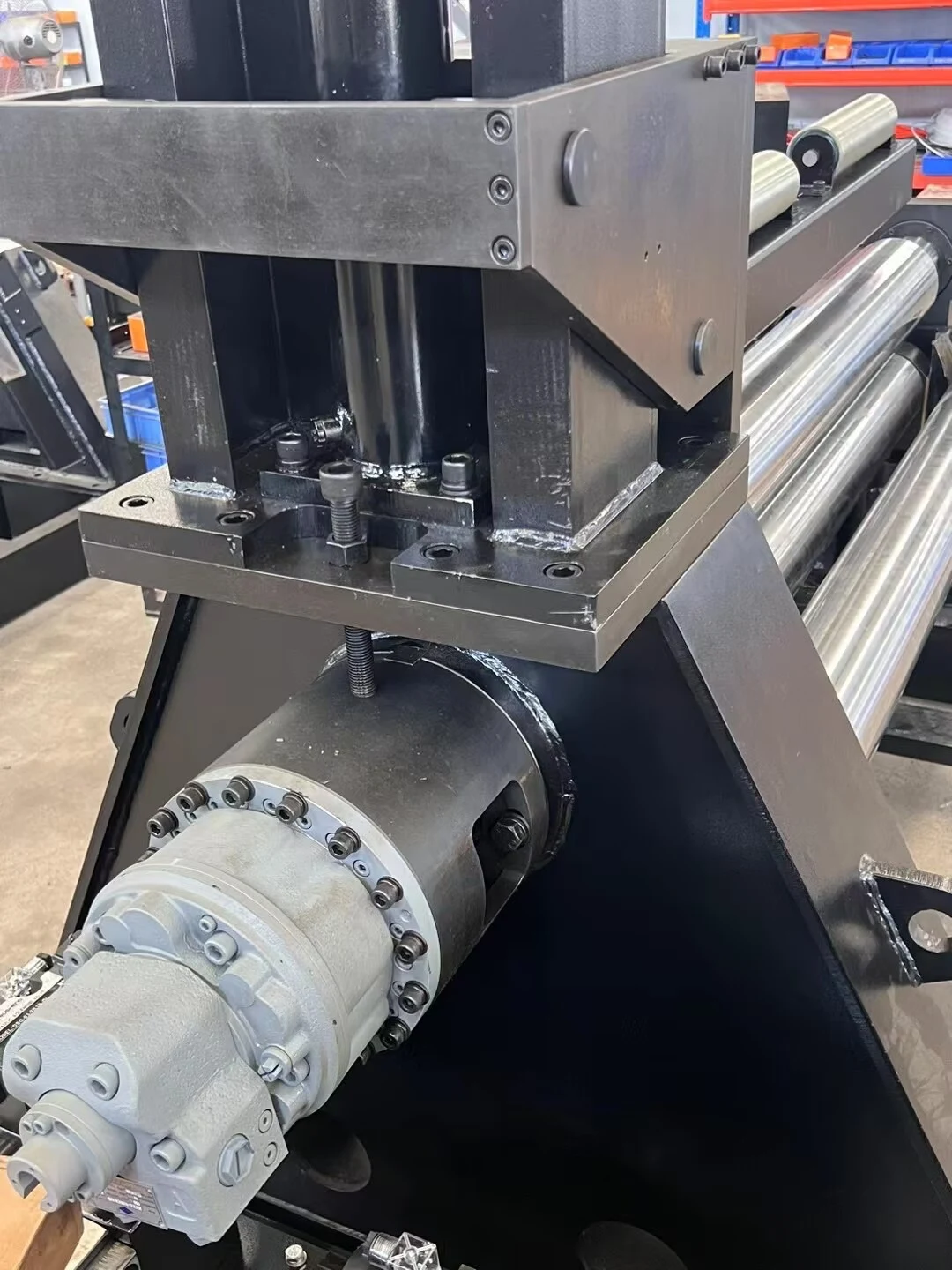



Full-Servo Four-Roll CNC Rolling Machine
For thin-sheet rolling, CNC servo motors control the drive roll, pressure roll and both side rolls. The side rolls travel linearly for pre-bending, and synchronized servo control supports precise positioning and fast response.
| Parameter | Specification |
|---|---|
| Model | RCRM-1250 |
| Maximum rolling width | 1,250 mm |
| Material thickness range | Cold-rolled steel 0.5–1.5 mm · Stainless steel 0.5–1.0 mm |
| Maximum rolling thickness | 1.0 mm |
| Maximum pre-bending thickness | 1.0 mm |
| Upper roll diameter | Ø72 mm · 42CrMo forged steel |
| Lower roll diameter | Ø90 mm · 42CrMo forged steel |
| Side roll diameter | Ø80 mm · 42CrMo forged steel |
| Work roll drive | Full servo drive |
| Sheet yield strength | ≤245 MPa |
| Rolling speed | Approx. 10 m/min |
| Remaining straight edge after pre-bending | ≤1 × sheet thickness |
| Minimum rolling diameter at full load | Ø85 mm with 0.8 mm cold-rolled steel · Ø100 mm with 0.95 mm stainless steel |
| Total machine power | 4.2 kW |
The datasheet lists a cold-rolled steel processing range up to 1.5 mm and a maximum rolling thickness of 1.0 mm. Share your material, width and target diameter to confirm capacity for your part.
View Original Datasheet ↗No universal capacity is implied by roll count. Minimum diameter, rolling capacity, pre-bending capacity and final roundness depend on the selected machine, material and workpiece. Cone rolling and special shapes require a separate technical review.
Plate Rolling Applications: Ducts, Cylinders and Cones
Ducts & ventilation parts
For ducts and fan housings, review sheet handling, surface condition and seam-edge alignment along with the required diameter and length.
Cylinders & rolled shells
For rolled shells and cylindrical components, specify material strength, plate width, diameter and acceptance limits. Include any downstream welding requirements.
Cones & custom components
Send a drawing showing both end diameters, overall length and required geometry. Tooling, roll arrangement and material handling need a project-specific check.
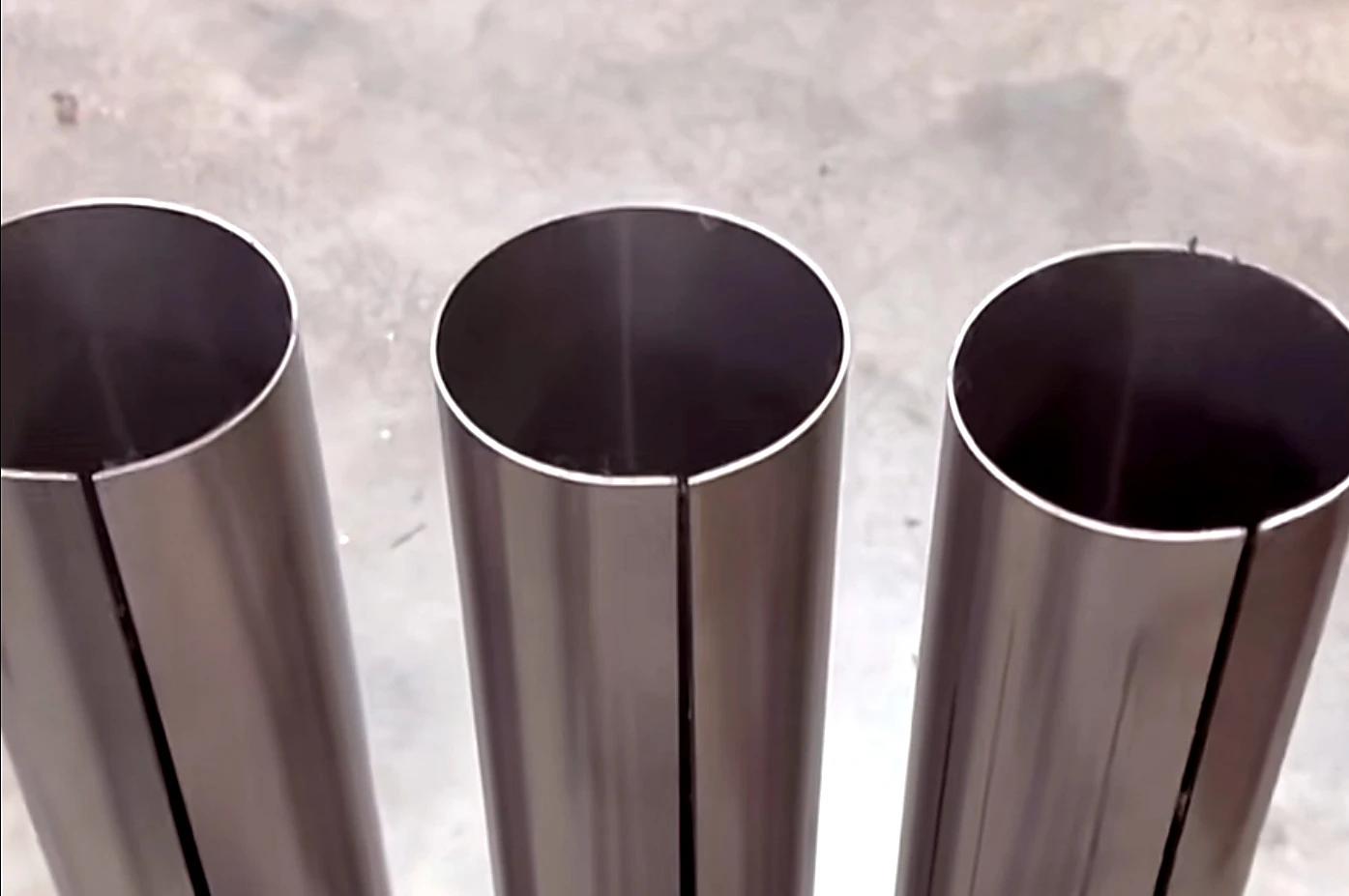
From Flat Sheet to Rolled Cylinder


Rolling Line in Action
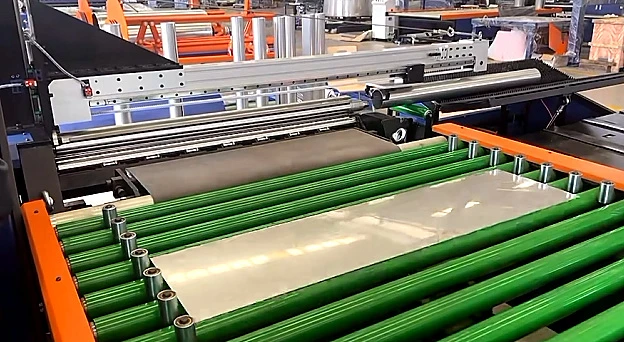

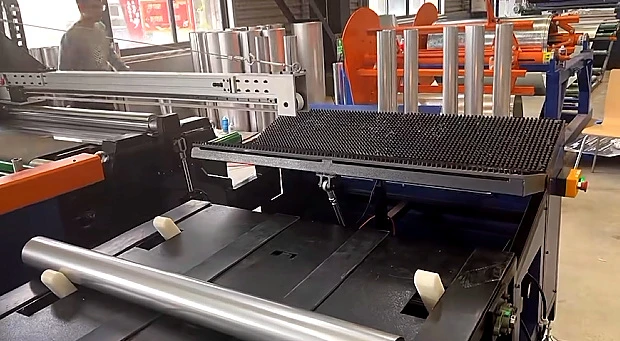
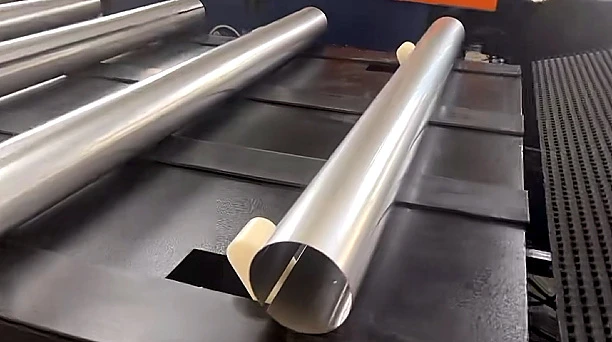
Large-Diameter Shell Rolling

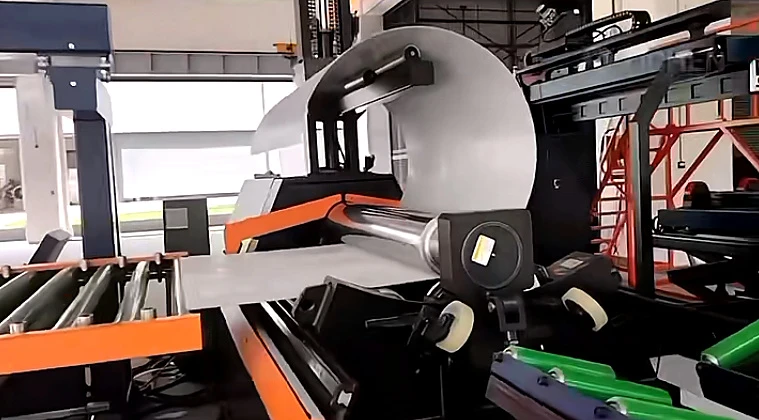
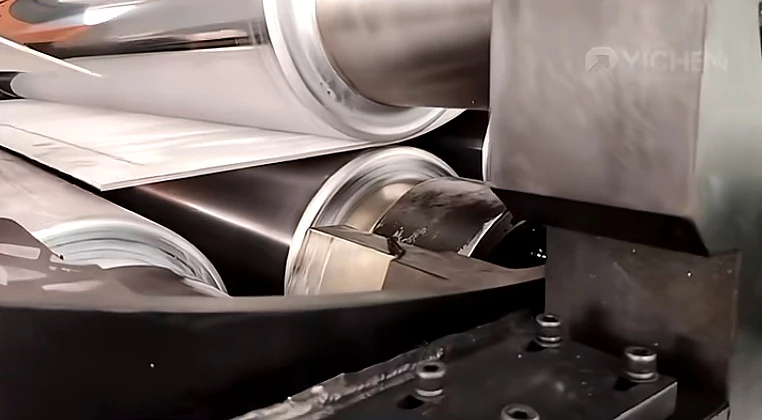
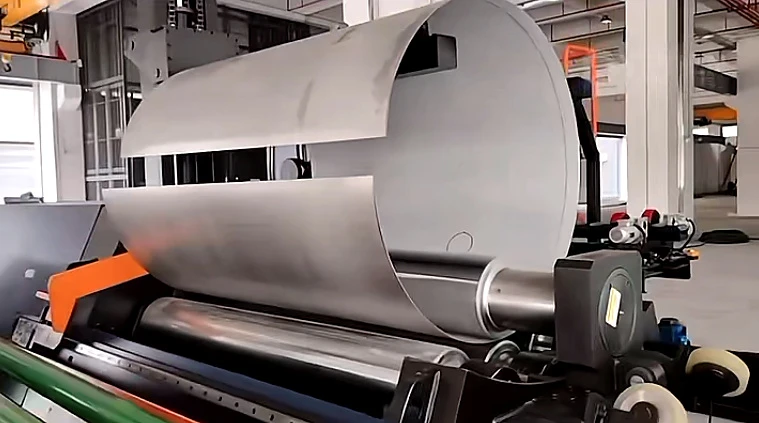
Automated Sheet Rolling and Seam Welding Lines
Evaluate your automated rolling and welding line as a complete process. Define the blank, finished part, weld standard and target cycle before finalizing individual machines. Read the round duct rolling and welding line planning guide to prepare your production brief.
Prepare the blank
Confirm whether production starts with pre-cut sheets or requires feeding, leveling and cutting equipment.
Roll the workpiece
Match rolling, part support and transfer to the diameter range, material and required shape.
Review the seam
Define edge alignment, clamping, welding process and acceptance criteria around your material and joint.
Unload & inspect
Plan finished-part handling, dimensional checks and the interface with your next production step.
How to Specify Your CNC Plate Rolling Machine
A machine recommendation needs the full combination of material, width, thickness and diameter. Share your common production parts as well as your maximum requirement.
Material & plate size
Material grade, strength where available, thickness and plate width along the rolls.
Finished geometry
Inside or outside diameter, cylinder length, cone dimensions and dimensional acceptance criteria.
Edges & downstream work
Pre-bending needs, acceptable flat ends, seam gap, welding method and surface marking limits.
Production & handling
Daily output, batch sizes, changeover frequency, loading method and unloading requirements.
Plate Rolling Machine Selection: Common Questions
Use your drawing and representative material to establish what the proposed configuration can deliver.
Which rolling configuration should you choose?
Compare the part family, diameter range, material, edge requirements, output and handling method. A sample or drawing review helps define the appropriate configuration and any dedicated tooling.
Can the machine roll your smallest diameter?
Minimum diameter depends on the roll geometry, material, thickness and required forming result. Specify whether your dimension is an inside or outside diameter and request confirmation for the exact machine.
Are rolling and pre-bending capacities the same?
They should be checked separately. Ask for both capacities at the specified material grade and plate width, together with the expected remaining flat length at the edges.
Can rolling and welding be automated together?
A combined line needs coordinated loading, rolling, seam alignment, clamping, welding and unloading. Confirm the cycle time on your workpiece and define which operations are automatic, assisted or manual.
What should your quotation specify?
Confirm working width, material reference, rolling and pre-bending capacities, diameter range, controls, supports, tooling, electrical configuration, safeguarding, packing and commissioning scope.
Two-Roll Cylinder Rolling Machine
For repeat production of cylindrical parts in carbon steel, stainless steel and galvanized sheet. This two-roll configuration forms cylinders in one pass without a separate pre-bending step and uses touchscreen controls.
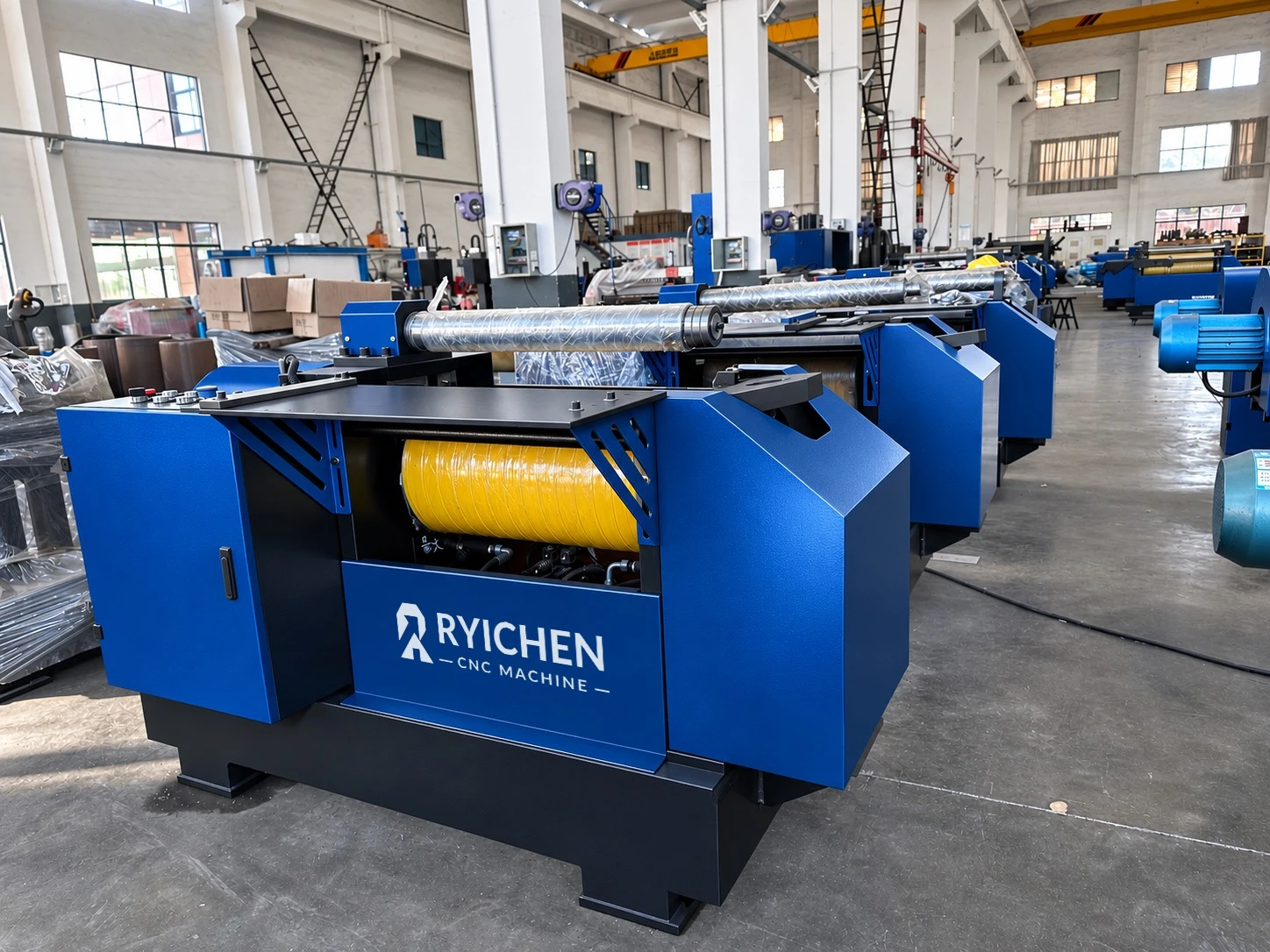

| Material | Sheet Thickness | Cylinder Diameter |
|---|---|---|
| Carbon steel | 0.6–3.0 mm | Ø150–800 mm |
| Stainless steel | 0.6–1.5 mm | Ø150–800 mm |
Machine dimensions (L × W × H) 2,790 × 720 × 1,250 mm.
Share your material grade, sheet width, thickness, target diameter and surface finish to confirm capacity for your part.
Send your part.
Plan your rolling solution.
Share a drawing and production brief to discuss the machine, tooling and automation scope your workshop needs.
- Material grade, thickness and plate width
- Target diameter and finished-part drawing
- Edge, seam and surface requirements
- Daily output and automation needs
- Factory power supply and destination
Email: pascalzhu@ryichen.com
WhatsApp / WeChat: +86 180 5200 9096